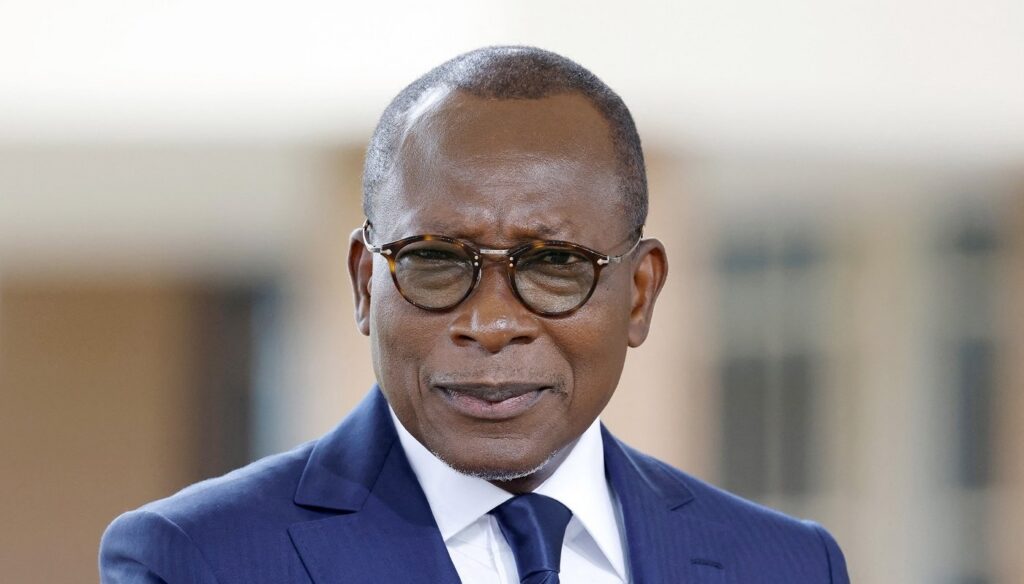
PORTO-NOVO, Aug. 7 (TOP243NEWS) – Former Beninese President Patrice Talon was elected on Thursday as the first President of Benin’s Senate, following the official inauguration of the country’s upper chamber of Parliament in Porto-Novo.
The election marks another key step in the implementation of institutional reforms launched after the constitutional amendment that established a bicameral Parliament.
The Senate’s leadership includes Louis Vlavonou as Vice President, Alassane Séidou as Rapporteur, and Adidjatou Mathys as Deputy Rapporteur.
Their election completes the installation of the governing bodies of the new institution, which is expected to play a central role in the legislative process and in overseeing government action.
Talon’s election to the Senate presidency comes only months after leaving office at the end of his two constitutionally mandated presidential terms.
His return to a senior institutional position reflects efforts to ensure political continuity under Benin’s new constitutional framework while respecting presidential term limits.
The establishment of the Senate is one of the major innovations introduced by the 2025 constitutional reform. Benin’s Parliament now consists of two chambers: the National Assembly, which remains the lower house, and the Senate, tasked with reviewing legislation, representing territorial communities, and strengthening the country’s institutional balance.
During the inaugural session, Talon urged senators to make the new chamber a forum for dialogue, responsibility and consensus, stressing that the Senate should contribute to institutional stability and the consolidation of the rule of law.
The development marks the beginning of a new political chapter for Benin, now led by President Romuald Wadagni, while Talon retains institutional influence as head of the upper chamber.
The inauguration of the Senate therefore formalizes the country’s transition to a new institutional architecture, whose impact on governance and democratic practice will become clearer in the years ahead.
Mike Pakoto | TOP243NEWS